

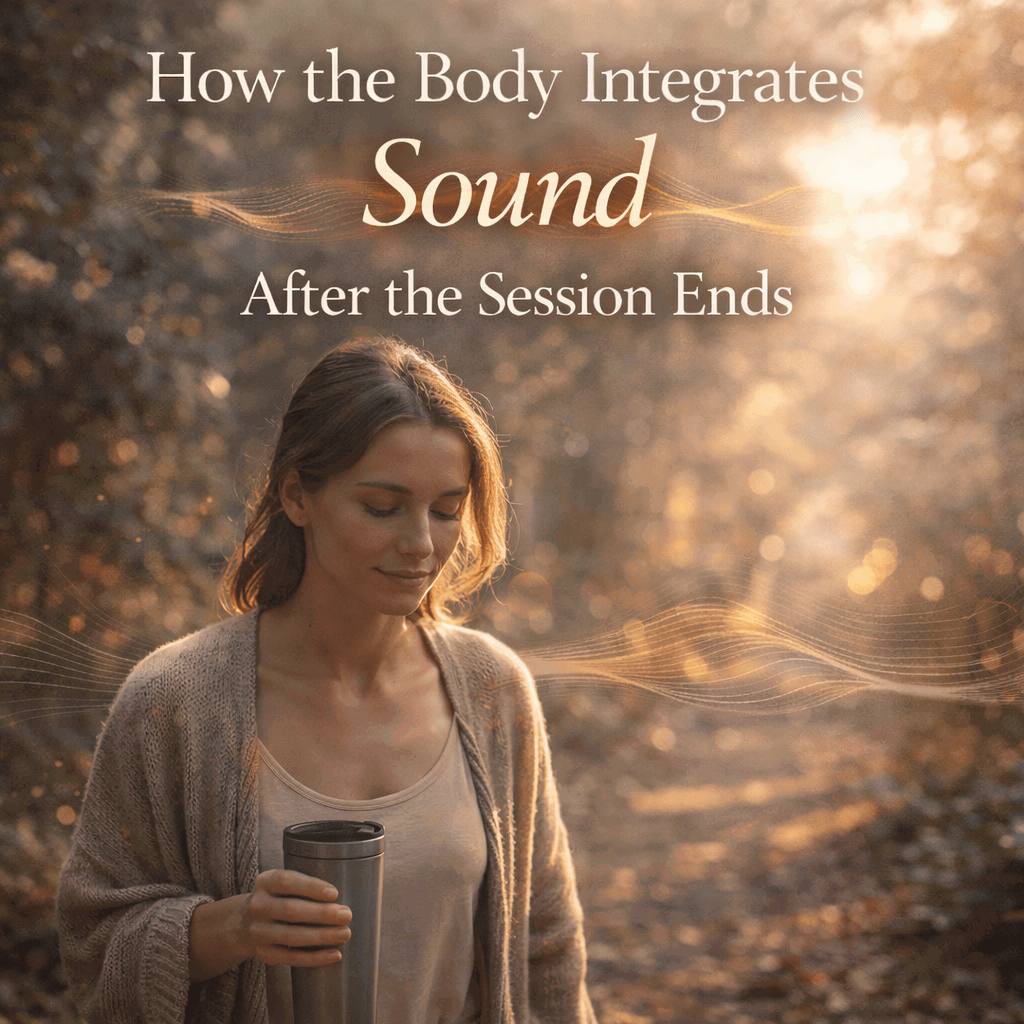
For many people, the most surprising part of a sound bath is not what happens during the session — but what happens afterward. The sound fades, the room reorients, and the experience seems complete. Yet hours or even days later, something continues to shift. Sleep feels different. Emotions feel less reactive. The body feels quieter in ways that are difficult to explain.
This isn’t imagination or delayed suggestion. It’s integration — and it’s one of the most important, and least understood, aspects of sound healing.
Integration Is a Nervous System Process
When sound works effectively, it supports the nervous system in moving out of vigilance and into regulation. That shift doesn’t always complete itself in the moment. For many bodies, especially those that have been under long-term stress, safety unfolds gradually.
During a sound bath, the nervous system may begin to downshift, but integration often happens later — when the body has time, space, and fewer external demands. This is why people sometimes feel neutral or “quiet” during the session, only to notice meaningful changes afterward.
The nervous system doesn’t rush change. It reorganizes at a pace that feels sustainable.
Why the Effects Can Be Subtle at First
Modern culture tends to value peak experiences: emotional release, insight, intensity, or catharsis. But regulation often shows up quietly. Integration may look like:
- deeper or more restorative sleep
- less mental noise
- a softer emotional baseline
- reduced physical tension
- increased sensitivity to overstimulation
These changes can be easy to miss if someone is expecting a dramatic outcome. Yet they are often signs that the body is recalibrating rather than reacting.
Sound Continues to Work After It Stops
Sound doesn’t just affect the ears — it affects rhythm, vibration, and internal coherence. Once those systems are influenced, the body continues responding even after the sound ends.
Think of sound as setting conditions rather than delivering a result. When the conditions are right — safety, consistency, absence of pressure — the body completes the process on its own.
This is why integration often unfolds during rest, sleep, or moments of quiet attention rather than during the session itself.
The Role of Stillness After a Sound Bath
One of the most supportive things someone can do after a sound bath is very simple: avoid immediately filling the space. Jumping straight into stimulation, conversation, or problem-solving can interrupt integration before it has time to settle.
Stillness allows the nervous system to register what has changed. It gives the body a chance to notice that it no longer needs to brace in the same way it did before.
Integration doesn’t require effort — but it does benefit from spaciousness.
When Integration Feels Uneven
Sometimes integration shows up as fluctuation rather than calm. A person might feel tired, emotionally tender, or unusually sensitive for a short period of time. This doesn’t mean the sound bath “stirred something up” in a negative way. It often means the nervous system is reorganizing patterns that were previously held in place by tension.
As long as this process feels contained and not overwhelming, it’s generally part of the body finding a new baseline.
Trusting the Quiet Changes
One of the most helpful shifts someone can make after a sound bath is moving away from evaluation. Instead of asking, “Did it work?” a more supportive question is, “What feels different over time?”
Integration rarely announces itself. It shows up in how the body carries daily life — in the spaces between reactions, in the ease of ordinary moments, in the absence of strain that once felt normal.
Sound healing doesn’t end when the sound stops.
In many ways, that’s when the body begins to listen most deeply.
Want to understand the healing power of frequencies? Download: Healing Frequencies – The Complete List