Have you ever found yourself thinking:
“Nothing is wrong. So why can’t I relax?”
Maybe you’ve finally finished the project, returned from vacation, settled an argument, or checked every item off your to-do list. On paper, life looks fine. Yet your shoulders remain tight. Your thoughts keep racing. Your chest feels heavy. Sleep doesn’t come easily, and even small inconveniences feel overwhelming.
If this sounds familiar, you’re not imagining it—and you’re certainly not failing at relaxation.
One of the greatest misunderstandings about stress is the belief that once a stressful situation ends, our bodies should simply return to normal. But your nervous system doesn’t work from a calendar or a checklist. It works from one question:
“Am I safe?”
Until your body answers “yes,” it may continue acting as though the danger is still present.
Your Brain Isn’t the Only One Making Decisions
Most of us assume that feeling safe begins with our thoughts.
If we can convince ourselves everything is okay, we expect our bodies to follow.
In reality, the opposite is often true.
Your nervous system is constantly gathering information through your senses, your breathing, your muscles, your heartbeat, and countless signals throughout your body. Long before you’re consciously aware of it, your brain is evaluating whether you’re safe enough to relax.
This process happens automatically. It’s one of the remarkable ways your body has evolved to protect you.
When Protection Becomes the Default
Stress isn’t the enemy.
In fact, it’s essential. Stress helps you respond to challenges, avoid danger, and adapt to life.
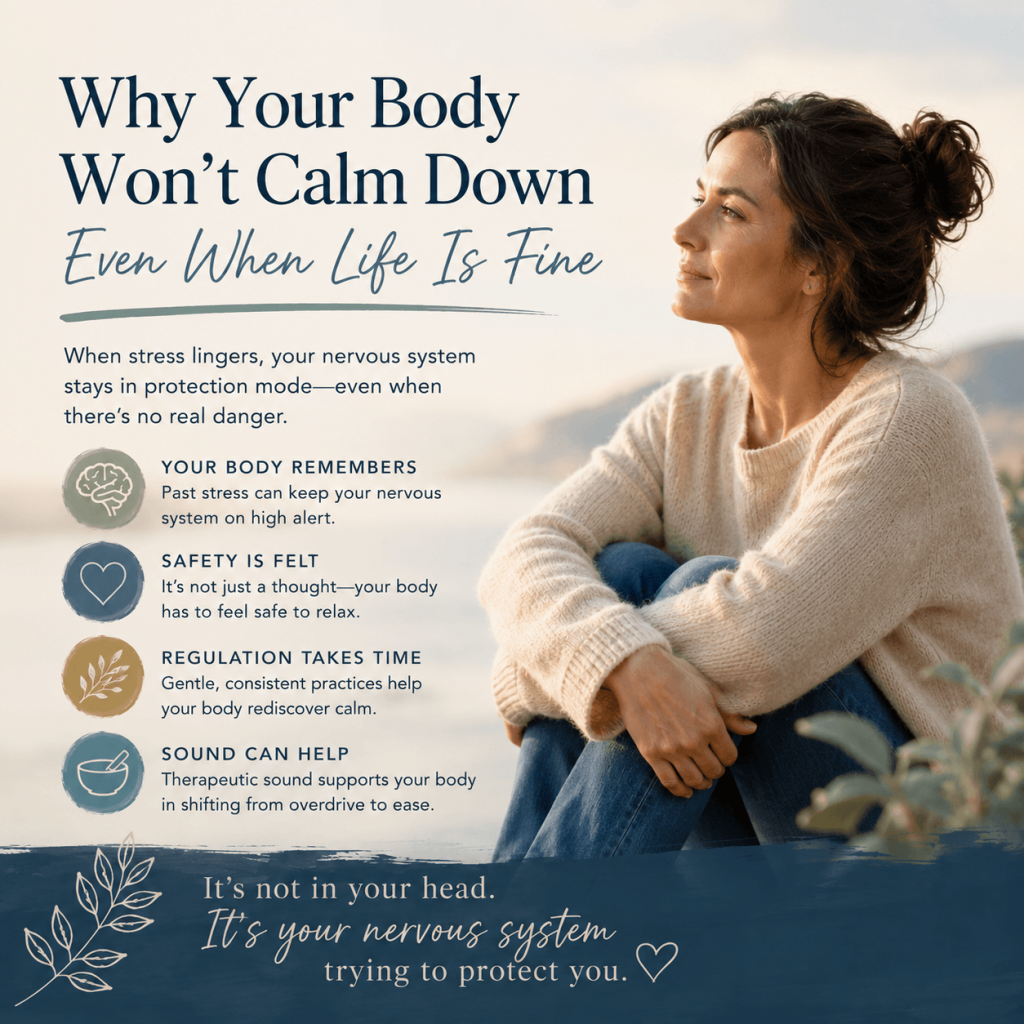
The problem comes when your nervous system never fully returns to a state of recovery.
Months—or even years—of chronic stress, caregiving, illness, burnout, loss, uncertainty, or simply living at a relentless pace can teach your body to stay alert. Eventually, vigilance becomes familiar. Your mind may recognize that the crisis has passed.
Your body may not.
Meet the Vagus Nerve
One of the most important players in helping your body recover is the vagus nerve.
The vagus nerve is the longest cranial nerve in your body, connecting your brain with your heart, lungs, digestive system, vocal cords, and many other organs.
Think of it as a communication highway.
It continually carries information between your brain and your body, helping regulate heart rate, breathing, digestion, inflammation, and emotional regulation.
When this system is functioning well, it becomes easier to shift from alertness into restoration. You breathe more easily. Your muscles soften. Your thinking becomes clearer. You feel more connected to yourself and the people around you.
Safety Is Something You Feel
This may be the most important idea of all:
Safety isn’t only something you think. It’s something your body experiences.
You can logically know you’re safe while your nervous system is still operating from old patterns of protection. That doesn’t mean you’re broken. It means your body is trying to take care of you using information it learned from previous experiences.
The nervous system always chooses protection over comfort.
Why “Just Relax” Doesn’t Work
If you’ve ever been told to “just calm down,” you’ve probably noticed how unhelpful that advice feels. That’s because relaxation isn’t something we force. It’s something our nervous system allows.
Trying harder often creates more frustration because you’re asking your thinking brain to override biological processes that developed to keep you alive. Your body isn’t resisting you.
It’s protecting you.
Helping Your Nervous System Rediscover Safety
Fortunately, the nervous system is remarkably adaptable. Small, repeated experiences of safety help create new patterns over time.
Supportive practices include:
- Gentle breathing without forcing it
- Walking in nature
- Meaningful human connection
- Consistent sleep routines
- Mindful movement
- Time away from constant stimulation
- Music and therapeutic sound experiences
None of these “fix” the nervous system overnight. Instead, they give your body opportunities to remember what regulation feels like.
Where Sound Can Help
Sound affects us in profound ways.
Think about how one song can instantly bring tears to your eyes, while another makes you smile before you’ve consciously recognized it.
That’s because sound is processed not only intellectually, but physically and emotionally.
Research continues to explore how calming auditory experiences may support relaxation, reduce stress, and encourage shifts toward a more regulated nervous system.
Many people find that immersive sound experiences help them notice something unusual:
Their breathing slows naturally.
Their shoulders release.
Their thoughts become quieter.
Not because they forced themselves to relax—but because their bodies finally felt safe enough to soften.
You Don’t Have to Earn Rest
If you’ve been wondering why your body won’t calm down, know this:
You aren’t weak. You aren’t failing. And you certainly aren’t “doing relaxation wrong.” Your nervous system has simply been working hard to protect you.
With patience, compassionate awareness, and experiences that support regulation, your body can begin learning something new. Not all at once.
But one safe moment at a time.
Ready to Experience It for Yourself?
Understanding your nervous system is valuable—but experiencing regulation is where change begins.
Join me for the Monday Reset, a 30-minute live online sound experience designed to help your body settle, your mind quiet, and your week begin from a place of greater calm.
Give your nervous system 30 minutes. It may be the most important appointment you keep all week.
→ Learn more about the Monday Reset