


And the Other Practices That Help Your Nervous System Exhale
There’s a moment many people quietly reach in adulthood — a moment when the body feels like it’s bracing for impact even on calm days. You go about your life, but something inside never fully unclenches. You’re functional, even thriving in ways, but the body feels like it’s on high alert: shallow breath, tight jaw, shoulders guarding your heart.
If this is you, you’re not broken. You’re not dramatic.
You’re a human whose nervous system has simply been working overtime.
Feeling safe in your body again isn’t about suddenly relaxing.
It’s about learning how to create conditions where your system believes:
“I can soften now.”
Sound therapy is one of the most powerful ways to do that — but it’s part of a larger constellation of practices that help the body relearn safety from the inside out.
Why “Safety” Matters More Than Calm
Calm is a state.
Safety is a felt truth.
When your nervous system senses safety, your entire inner world shifts:
- breath moves deeper without effort
- muscles soften their grip
- digestion returns
- your mind becomes more spacious
- you can connect, empathize, and trust again
But when the body feels unsafe, even subconsciously, it lives in micro-bracing:
- hypervigilant scanning
- difficulty receiving care
- constant mental planning
- detachment from joy
Safety isn’t a mindset.
It’s a physiological condition.
This is why cognitive tools alone rarely work.
You can’t think your way out of a guarded body.
You must create experiences that show your nervous system a new pattern.
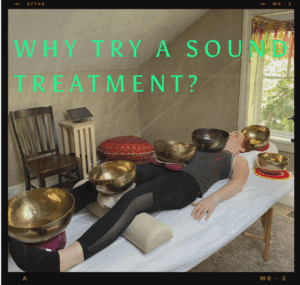
How Sound Therapy Helps Your Body Feel Safe Again
Sound is one of the few sensory inputs that bypasses mental resistance and speaks directly to the limbic system — the part of the brain that governs safety, emotion, and memory.
Through vibration and frequency, sound communicates:
“You can let go now.”
Here’s what happens physiologically:
- your vagus nerve responds to the steady, predictable tones
- heart rate and breath naturally synchronize
- the amygdala (fear center) quiets
- your brain shifts into slower, restorative waves
- your muscles release tension without force
- your mind feels “held” instead of overwhelmed
People often describe the experience as “my body remembered how to exhale,” or “I felt held by something bigger than me.”
Sound doesn’t force safety.
It invites it.
But sound therapy is even more powerful when paired with other practices that gently re-pattern your nervous system.
Let’s explore those.
Other Ways to Feel Safe in Your Body Again (That Work Beautifully With Sound)
These aren’t huge life changes — they’re small, nervous-system-friendly practices that say:
“I’m here, you’re safe, we can soften together.”
1. Micro-Grounding Through the Feet
Safety doesn’t start in the chest — it starts in the feet.
Try this once a day:
- place both feet on the floor
- press down gently
- inhale for 4
- exhale for 6
This taps the parasympathetic nervous system and signals stability from the ground up.
Pair this with a low-frequency sound bath and the effect is multiplied.
2. The Hand-Over-Heart Technique
This one rewires emotional safety faster than anything.
Place your palm on your chest.
Feel warmth.
Let your body soften into your own hand.
This gesture tells your nervous system:
“You’re not alone. I’m here with you.”
Do this before sound therapy and the session lands even more deeply.
3. Weighted Blanket or Bolster Support
Your system calms dramatically when it feels light pressure — a concept called “deep pressure therapy.”
It stimulates the same receptors that calm children and animals.
Use:
- a weighted blanket
- a sandbag across the hips
- a rolled blanket under the knees
When your body feels held, the mind follows.
4. Soft Eyes Practice
This is one of the fastest ways to shift from fight-or-flight into social engagement.
Let your eyes soften.
Release the micro-focus.
Widen your gaze slightly.
Your brain reads a soft gaze as “I’m safe enough to rest.”
Try this during your next sound bath — it changes everything.
5. Breath That Doesn’t Try Too Hard
If breathwork feels like work, it won’t help.
Try instead:
The Sigh Technique
- inhale gently
- exhale with a sigh
- let your shoulders drop
Sighing is the body’s natural reset button.
When paired with soothing frequencies, it becomes a full-body release.
6. Nervous System “Companions”: Heat + Sound
Warmth is a primal safety signal.
Try combining:
- sound bowl resonance
- heating pad on the belly or low back
- warm socks or blanket
Warmth + vibration = deep nervous system surrender.
7. Co-Regulation With Someone Safe
You don’t even need touch.
Just presence.
If you can sit beside or across from someone who feels emotionally steady, your nervous system picks up their regulation through micro-cues:
- breath
- facial expression
- tone
- presence
This is why people feel so safe in your sound baths, Dorothy.
You are the co-regulator.
But you also deserve relationships that co-regulate you.
8. Rituals of Predictability
Your nervous system LOVES patterns.
Create a predictable ritual around sound therapy:
- light a candle
- open a journal
- take three breaths
- listen to the same opening track
- end the same way each time
Predictability builds trust.
Trust builds safety.
Safety opens the body.
Relearning Safety Takes Time — but You Can Absolutely Do It
Most people try to relax through force:
- “I should calm down.”
- “I need to stop feeling anxious.”
- “I should be over this by now.”
But the nervous system doesn’t respond to shoulds.
It responds to conditions.
When you pair sound therapy with small, consistent somatic practices, your system slowly learns:
“It’s okay to soften.”
“It’s okay to be here.”
“It’s okay to be me.”
This is how you reclaim safety — not in your mind, but in your body.
Sound opens the door.
Your daily rituals teach your system to walk through it again and again.
And that’s how you return home to yourself.
Want a deeper reset? Download the Feel Safe Again Ritual Guide → Grab Yours Now