

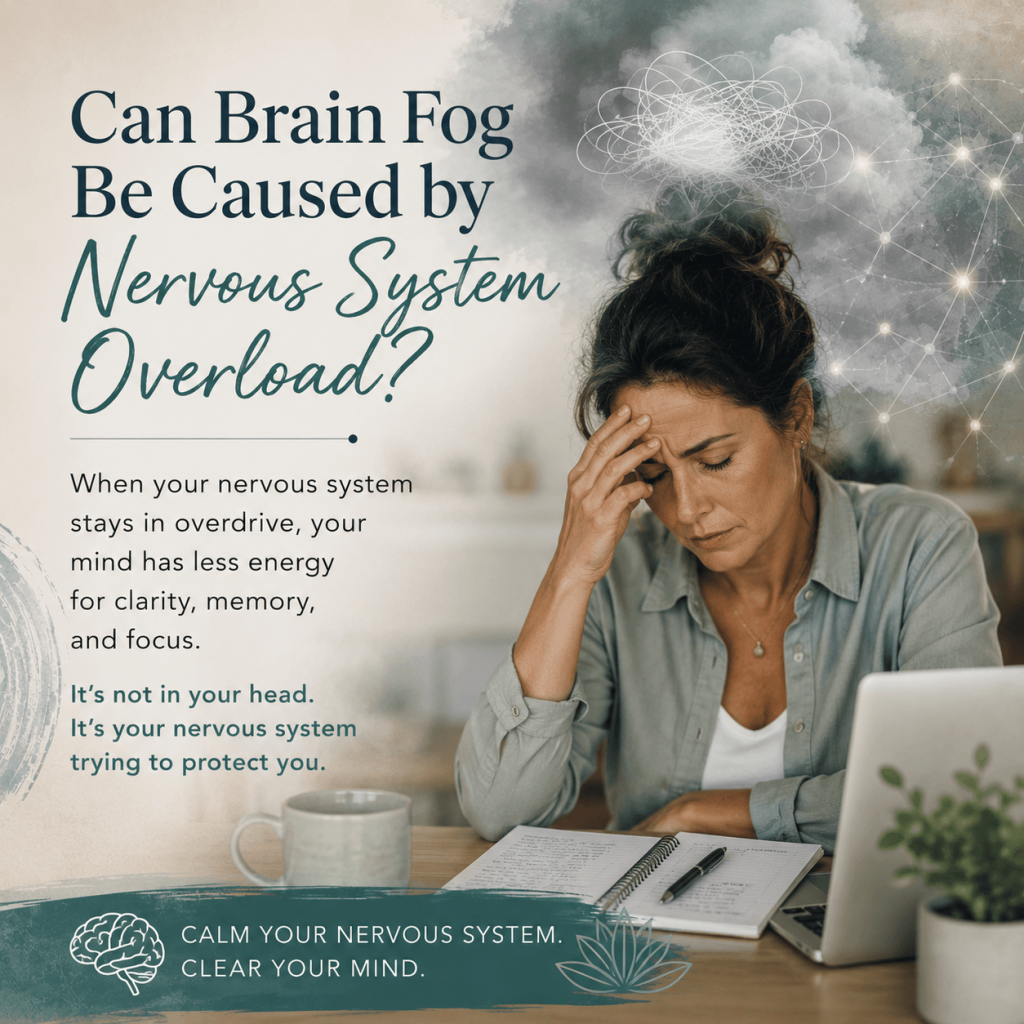
Have you ever sat down to solve a problem that should have been familiar, only to find that your mind just wouldn’t cooperate?
The ideas are there, but they don’t seem to connect. You lose your train of thought halfway through a conversation. Simple decisions suddenly feel more difficult than they should. You reread an email several times before it finally sinks in.
Many people describe this experience as brain fog.
It’s frustrating because it can leave you wondering whether you’re simply getting older, not sleeping well enough, or somehow losing your mental edge. While there are certainly medical conditions that can contribute to brain fog—and those should always be discussed with your healthcare provider—there’s another possibility that often goes unrecognized.
Your nervous system may simply be carrying more than you realize.
What Is Brain Fog?
Brain fog isn’t a medical diagnosis. It’s a term people use to describe a collection of experiences such as difficulty concentrating, forgetfulness, mental fatigue, slower thinking, trouble finding the right words, or simply feeling mentally “cloudy.”
Although these symptoms seem like they’re happening entirely in your brain, they often reflect something much broader. Your brain doesn’t operate independently from the rest of your body. It’s constantly responding to signals from your nervous system.
Why Clear Thinking Becomes More Difficult
Your brain has a remarkable ability to adapt.
When life feels manageable, it has plenty of capacity for planning, learning, creativity, memory, and sustained attention. But when life has been demanding for weeks, months, or even years, your brain naturally begins investing more energy in monitoring, anticipating, and preparing for whatever comes next.
That doesn’t necessarily mean you feel anxious.
Many people experiencing nervous system overload describe themselves as simply being busy, carrying too much responsibility, juggling multiple priorities, or feeling like their mind never completely shuts off. Even during quiet moments, part of their attention remains occupied by what’s coming next, what they may have forgotten, or what still needs to be done.
The result is that fewer mental resources remain for clear thinking.
The Neuroscience Behind It
In neuroscience, this is often described in terms of safety.
When the nervous system believes it needs to remain prepared for potential challenges, it naturally shifts resources toward protection and away from higher-level functions like sustained attention, memory, creativity, and problem-solving.
That doesn’t mean you consciously feel unsafe.
It means your nervous system may have become so accustomed to operating in a state of constant readiness that it continues doing so even when there’s no immediate danger. It’s simply trying to stay one step ahead of life’s demands.
Why Rest Doesn’t Always Clear the Fog
This also explains why brain fog doesn’t always disappear after a good night’s sleep or a relaxing weekend.
Recovery isn’t simply about stopping activity. It’s about giving your nervous system an opportunity to shift out of a state of constant preparation.
If your mind is still mentally organizing tomorrow’s schedule, replaying yesterday’s conversation, or anticipating the next challenge, your body may be resting while your nervous system is still working.
Helping Your Mind Feel Clear Again
If nervous system overload is contributing to your brain fog, the answer usually isn’t to force yourself to think harder.
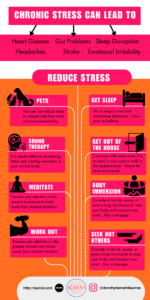
Instead, it helps to create moments throughout the day that allow your nervous system to settle. Practices such as mindful breathing, restorative meditation, therapeutic sound, spending time in nature, or simply taking intentional pauses between demanding tasks can gradually help your brain redirect energy away from constant monitoring and back toward clear thinking.
People often expect dramatic changes, but what usually happens is much quieter.
One day you realize you finished reading an entire chapter without losing focus. You remember names more easily. Decisions don’t feel quite so exhausting. Conversations become easier to follow.
Those small moments are often the first signs that your nervous system no longer has to spend quite so much energy preparing for what’s next.
Don’t Ignore Persistent Brain Fog
Brain fog can have many different causes, including sleep disorders, hormonal changes, medication side effects, thyroid conditions, nutritional deficiencies, infections, and other medical concerns. If your symptoms are persistent, severe, sudden, or accompanied by other concerning changes, it’s important to talk with your healthcare provider to rule out medical causes.
A Different Way to Think About Brain Fog
Brain fog doesn’t always mean something is wrong with your brain.
Sometimes it’s a sign that your nervous system has been working overtime for so long that clear thinking has quietly taken a back seat to constant preparation.
The encouraging news is that when your nervous system begins to experience more moments of regulation, your mind often begins to recover something that was never truly lost—its natural clarity.
If you’re looking for a gentle way to calm your nervous system, my weekly Monday Reset combines guided meditation with therapeutic sound to help create the internal conditions for greater clarity, focus, and emotional balance.