


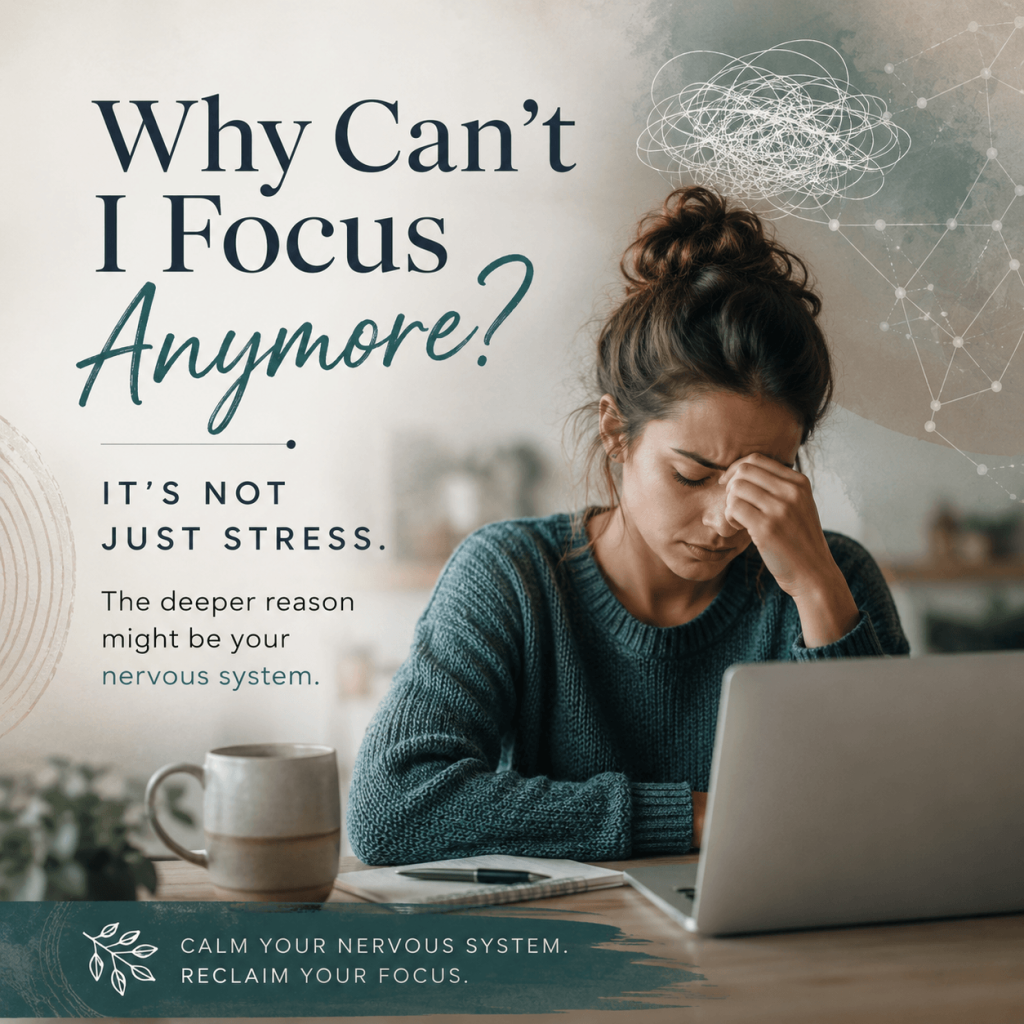
Have you ever found yourself reading the same paragraph three times without absorbing a single word? Or walked into a room only to forget why you went there? Maybe you’ve been in the middle of a conversation when your mind suddenly drifted away.
If you’ve caught yourself wondering, “Why can’t I focus anymore?” you’re certainly not alone. Many people assume they’re simply stressed, getting older, or becoming less disciplined. But often there’s something deeper happening beneath the surface.
Focus Isn’t Just About Your Brain
We tend to think of focus as a mental skill. We tell ourselves we need more discipline, fewer distractions, or a better productivity system. While those things can help, they don’t tell the whole story.
Your ability to focus is deeply connected to your nervous system.
One of your brain’s primary jobs is to keep you safe. Every moment of every day, it’s making a split-second decision: Can I settle into this task, or do I need to stay alert for something more important?
When life feels demanding for weeks, months, or even years, your nervous system naturally shifts into a more vigilant state. Instead of supporting deep concentration, it begins scanning for potential problems. That isn’t a flaw in your brain—it’s an adaptation designed to help you navigate uncertainty.
Why Everything Feels Like a Distraction
When your nervous system remains on high alert, your attention changes.
You may notice that you lose your train of thought more easily, jump between tasks without finishing them, or reach for your phone even when you genuinely want to concentrate. You might read an email several times before it sinks in or finish the day feeling mentally exhausted despite not accomplishing what you intended.
Many people call this “brain fog,” but what they’re often experiencing is a brain that’s dedicating enormous energy to monitoring the environment rather than supporting sustained attention.
You Haven’t Lost Your Ability to Focus
One of the biggest misconceptions is that something is wrong with you.
More often, your nervous system has simply become accustomed to staying prepared.
Think about the last time you were waiting for important news, navigating a difficult relationship, worrying about finances, or caring for someone else’s needs. Even when those concerns weren’t in the front of your mind, part of your nervous system remained on watch. That constant background vigilance quietly consumes mental energy, leaving less available for concentration, creativity, and clear thinking.
The result is that you begin to feel scattered—not because you’re incapable of focusing, but because your brain has been prioritizing protection over sustained attention.
Why Trying Harder Usually Doesn’t Help
Most of us respond by pushing harder.
We buy another planner, download another productivity app, drink another cup of coffee, or promise ourselves we’ll simply become more disciplined.
While those strategies may provide temporary improvement, they don’t address what’s happening underneath. If your nervous system still believes it needs to remain on alert, trying harder often creates even more frustration because you’re asking your brain to concentrate while another part of it is still scanning for potential problems.
A Different Way to Think About Focus
What if improving your focus wasn’t primarily about training your mind?
What if it began by helping your body experience a greater sense of safety?
As the nervous system begins to settle, many people notice that their thoughts become clearer. Decisions come more easily. Mental chatter quiets, creativity returns, and it’s easier to stay engaged with one task instead of bouncing between ten.
These changes don’t happen because someone suddenly becomes more disciplined. They happen because the brain no longer has to divide its attention between the present moment and perceived threats.
Focus Begins with a Regulated Nervous System
One of the most overlooked truths about concentration is that a regulated nervous system creates the conditions for sustained attention.
That doesn’t mean life suddenly becomes stress-free. It means your body no longer has to respond to every challenge as though it’s an emergency. When that happens, your natural ability to focus has the opportunity to return—not because you forced it, but because your brain finally has the capacity to do what it was designed to do.
Restoring Your Ability to Focus
If you’ve been struggling to concentrate, try to resist the temptation to label yourself as lazy, unmotivated, or incapable. Difficulty focusing is often a signal, not a character flaw. Your nervous system may simply be asking for something it hasn’t had enough of: genuine restoration.
Practices that help regulate the nervous system—such as mindful breathing, restorative meditation, therapeutic sound, spending time in nature, and intentionally creating moments of recovery—can help your brain shift out of constant vigilance and back into a state where sustained attention feels natural again.
The goal isn’t simply to become more productive. It’s to create a nervous system that no longer has to spend so much energy protecting you, leaving more attention available for the people, work, and experiences that matter most.
If you’re looking for a practical way to calm your nervous system and improve your ability to focus, my weekly Monday Reset combines guided meditation with therapeutic sound to help you begin your week feeling calmer, clearer, and more present.