Over the years, I’ve heard some version of the same sentence many times.
“I can’t meditate.”
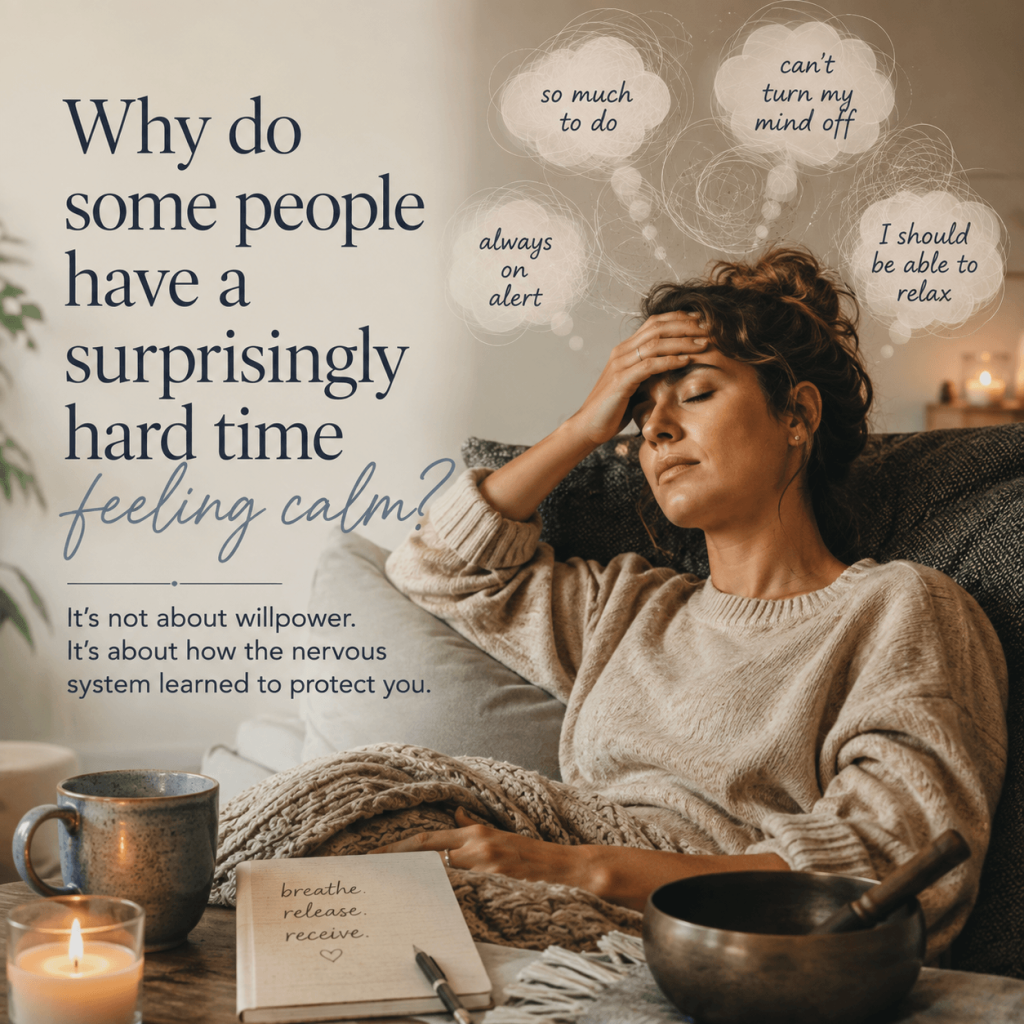
Sometimes it’s, “My mind just won’t shut off.” Or, “I could never lie there for an hour.” Occasionally someone tells me, before they’ve even experienced a sound bath, that relaxation simply doesn’t work for them.
What interests me isn’t just that they’re skeptical. It’s how certain they often are.
They aren’t saying, I’ve had difficulty relaxing.
They’re saying, I’m a person who can’t relax.
Somewhere along the way, an experience has become an identity.
And while I don’t think that’s the whole story of why some people have difficulty feeling calm, after years of watching people settle into sound baths, I’ve come to believe there’s something important underneath it.
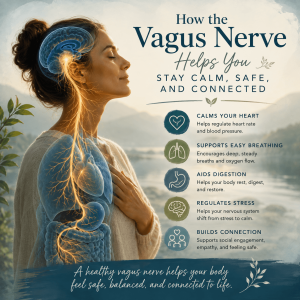
For some nervous systems, calm simply isn’t very familiar.
When Stress Becomes the Familiar State
We tend to think of stress as something that happens when life becomes unusually difficult. But stress can also become the background rhythm of ordinary life.
There are deadlines, responsibilities, people who need us, problems to solve, phones that never really stop talking to us, and minds that have become extraordinarily efficient at anticipating what needs attention next.
The nervous system adapts.
That’s what it’s designed to do.
When we’re repeatedly exposed to demands, our bodies become increasingly practiced at meeting those demands. We mobilize quickly. We stay alert. We anticipate. We scan. We keep moving.
And eventually, activation can begin to feel more familiar than stillness.
This is one reason I think some people are surprised by their own reaction when they’re finally given an opportunity to become quiet.
They expect calm to feel wonderful.
Sometimes it doesn’t.
Calm Can Feel Strangely Uncomfortable
Imagine spending most of your day moving at 60 miles an hour and suddenly being asked to come to a complete stop.
Your body may have stopped, but internally, everything is still moving.
Thoughts become louder. Restlessness appears. You notice sensations you weren’t paying attention to five minutes earlier. You remember something you need to do. You wonder how much longer you’re supposed to lie there.
And then comes the judgment: See? I knew I couldn’t do this.
I’ve watched this happen with meditation and with sound.
Someone comes in already convinced that their mind is too busy or that they aren’t capable of relaxing. Then the first few minutes of stillness seem to confirm exactly what they already believe.
But I don’t see that as evidence that they’re incapable of becoming calm.
I see a nervous system doing what it has become very good at doing.
It is continuing to anticipate, monitor and remain ready.
Your Nervous System Prefers Familiarity
One of the things I find fascinating about the nervous system is that what feels familiar and what is actually restorative aren’t necessarily the same thing.
If you’ve spent years being the responsible one, the busy one, the person who anticipates problems or keeps everything moving, activation may have become deeply familiar.
Stillness can feel almost suspicious.
There isn’t necessarily a conscious thought saying, I shouldn’t relax. The body may simply be more practiced at readiness than release.
This is where I think we sometimes misunderstand ourselves.
We assume that because calm doesn’t come naturally, something is wrong with us. Or we decide we’re simply “not a meditation person.”
But perhaps difficulty settling isn’t a personality trait at all.
Perhaps it’s an adaptation.
Then We Turn the Experience Into a Belief About Ourselves
This is the piece I hear in people’s language.
“I’ve tried meditation. It doesn’t work for me.”
“My brain won’t turn off.”
“I’m terrible at relaxing.”
If you’ve attempted to meditate several times and spent the entire experience thinking about your grocery list, your left foot, an email you forgot to send and whether everyone else is somehow achieving enlightenment while you’re wondering what’s for dinner, it’s understandable that you might reach a conclusion about yourself.
But there’s an important difference between “calm is difficult for my nervous system right now” and “I am incapable of becoming calm.”
The second statement turns a current nervous-system pattern into a personal truth.
And once we believe something is simply who we are, we’re much less likely to give ourselves experiences that might challenge that belief.
I’ve seen people surprise themselves.
They come into a sound bath doubtful that they’ll be able to settle. They tell me their minds never stop. And afterward, sometimes there’s genuine astonishment in their response.
“I can’t believe I relaxed.”
That moment interests me enormously, because something has just happened beyond relaxation.
Their experience contradicted their story about themselves.
Calm Isn’t the Absence of Thought
I also think we’ve created unrealistic expectations about what calm is supposed to feel like.
A regulated nervous system doesn’t mean an empty mind. It doesn’t mean you never become anxious, irritated, excited, overwhelmed or stressed.
And meditation doesn’t require somehow shutting down thought.
The nervous system is designed to move through different states depending upon what life requires. We need activation. We need energy and alertness. We also need the ability to settle when the demand has passed.
What matters is flexibility—the ability to move between states rather than becoming chronically stuck in one.
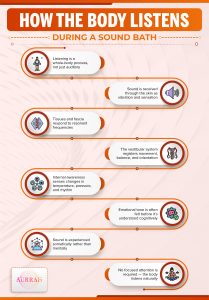
So when someone lies down for a sound bath and spends the first ten minutes thinking, that doesn’t mean nothing is happening. Their breathing may already be changing. Muscles may gradually be releasing. Their attention may begin shifting from external demands toward internal sensation.
Sometimes the mind is the last one in the room to get the memo.
The Body Learns Through Experience
This has become one of the most important ideas in the way I think about sound and nervous system regulation.
We can understand intellectually that we’re safe enough to relax and still have a body that remains braced.
That’s because nervous-system patterns aren’t changed only through explanation.
The body also learns through experience.
An experience of lying still without being needed. An experience of closing your eyes and discovering that nothing bad happens when you stop monitoring everything for a while. An experience of noticing tension soften without forcing it. An experience of becoming deeply quiet when you were absolutely certain you couldn’t.
One experience may not rewrite years of adaptation.
But it introduces another possibility.
And repeated experiences begin giving the nervous system something new to recognize.
Maybe You’re Better at Calm Than You Think
I’ve become very cautious about accepting people’s declarations that they “can’t relax.”
Not because I don’t believe their experience. I do.
I just don’t necessarily believe the conclusion they’ve drawn from it.
Difficulty accessing calm doesn’t mean you don’t possess the capacity for it. It may simply mean your nervous system has had far more practice doing something else.
And perhaps the goal isn’t to force yourself into stillness or become exceptionally good at meditation.
Maybe it’s simply to become curious about what happens when you give your body repeated opportunities to experience something different.
Because sometimes the most meaningful moment isn’t becoming perfectly calm.
It’s discovering that the thing you were certain you couldn’t do was never entirely beyond you in the first place.
If you’ve come to believe that you’re simply someone who can’t relax, perhaps the question isn’t whether you’re capable of calm. Maybe your nervous system has simply had far more practice being alert, busy, and ready for whatever comes next.
The Monday Reset is a 30-minute online sound and guided meditation experience that gives your body a regular opportunity to practice something different. You don’t have to be good at meditation or know how to quiet your mind. You simply show up—and give your nervous system the chance to discover that calm may be more available to you than you think.