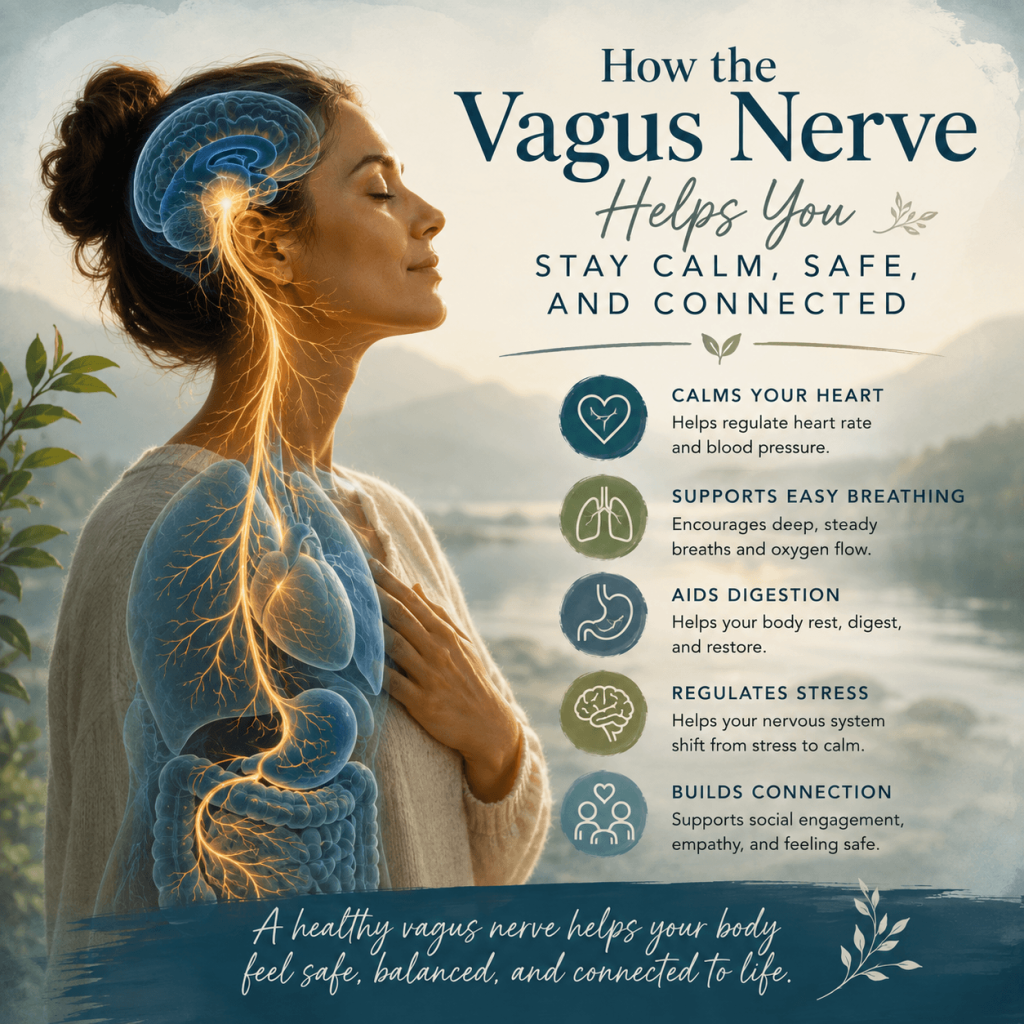
In recent years, the vagus nerve has received a great deal of attention—and for good reason.
Scientists continue to uncover the many ways this remarkable nerve influences how we breathe, digest food, recover from stress, connect with others, and experience emotional well-being.
But despite all the attention, the vagus nerve is often misunderstood.
Let’s explore what it actually does—and why it matters in everyday life.
What Is the Vagus Nerve?
The vagus nerve is the longest of the twelve cranial nerves.
Beginning in the brainstem, it travels through the neck and branches throughout the chest and abdomen, connecting with the heart, lungs, digestive organs, vocal cords, and other important systems.
Its name comes from the Latin word vagus, meaning “wandering,” because it travels such a long and complex path throughout the body.
Rather than controlling just one organ, it helps coordinate communication between many of them.
Your Body’s Communication Highway
Although messages travel both directions, much of the information carried by the vagus nerve actually travels from the body back to the brain.
That means your brain is constantly receiving updates about what’s happening inside your body.
How fast is your heart beating?
How deeply are you breathing?
Is digestion working smoothly?
Is the body calm—or preparing for danger?
These ongoing conversations help shape how you think, feel, and respond to the world around you.
Why the Vagus Nerve Matters
A healthy vagal system helps support many essential functions, including:
- A steady heart rate
- Efficient breathing
- Healthy digestion
- Reduced inflammation
- Emotional regulation
- Clearer thinking during stress
- Social engagement and connection
When your nervous system feels regulated, these functions tend to work together more smoothly.
Stress Changes the Conversation
Short periods of stress are completely normal. Your body was designed to mobilize when needed. The challenge comes when stress becomes constant. Extended periods of pressure can make it harder for the nervous system to transition back into recovery.
You might notice:
- Feeling “on edge”
- Trouble relaxing
- Shallow breathing
- Digestive discomfort
- Muscle tension
- Difficulty sleeping
- Feeling disconnected from yourself or others
These experiences don’t necessarily mean something is wrong with your vagus nerve. They often reflect a nervous system that has spent a long-time prioritizing protection.
Can You Strengthen the Vagus Nerve?
You may hear people talk about “vagus nerve exercises” or “vagal toning.”
Researchers often use the term vagal tone to describe how effectively the vagus nerve participates in regulating the body’s responses.
While no single exercise magically strengthens the vagus nerve, many healthy lifestyle habits appear to support nervous system regulation over time.
These include:
- Regular physical activity
- Healthy sleep
- Slow, comfortable breathing
- Positive social connection
- Mindfulness practices
- Time in nature
- Stress reduction
- Calming sensory experiences
The goal isn’t to force your nervous system into relaxation.
It’s to provide repeated experiences that help it become more flexible and responsive.
Where Does Sound Fit?
Sound has long been used across cultures to encourage relaxation and reflection.
Today, researchers are investigating how calming music and therapeutic sound may influence stress, mood, heart rate, and other markers associated with nervous system regulation.
Many people report feeling calmer, more grounded, and more connected after immersive sound experiences.
Rather than viewing sound as a cure, it’s more helpful to think of it as one of many supportive practices that can help create conditions where the nervous system is more likely to settle.
Calm Is More Than the Absence of Stress
Many people believe calm simply means “not feeling anxious.”
In reality, calm is a state in which your body feels safe enough to rest, think clearly, connect with others, and respond to life with greater flexibility.
The vagus nerve plays an important role in supporting that process.
Understanding how it works doesn’t just satisfy curiosity—it offers a new perspective on your own experiences.
If you’ve struggled to relax despite your best efforts, it may not be because you’re doing something wrong. Your body may simply be asking for experiences that help it rediscover safety.
And when that begins to happen, calm often follows naturally—not because you forced it, but because your nervous system was finally ready to receive it.
Ready to Experience It for Yourself?
Understanding your nervous system is valuable—but experiencing regulation is where change begins.
Join me for the Monday Reset, a 30-minute live online sound experience designed to help your body settle, your mind quiet, and your week begin from a place of greater calm.
Give your nervous system 30 minutes. It may be the most important appointment you keep all week.
→ Learn more about the Monday Reset