


A few days ago, I received a reply to one of my emails that simply said:
“There is no such thing as an inner voice.”
Interestingly, I didn’t feel offended by it.
I actually thought it was a good question.
Because the phrase inner voice is one of those pieces of language we use constantly without necessarily stopping to define what we mean by it. And the more I thought about it, the more I realized the conversation isn’t really about whether an inner voice literally exists.
It’s about how human beings try to describe internal experience using language that is, by nature, imperfect.
After all, we say things like:
- “I had a gut feeling.”
- “Something felt heavy on my heart.”
- “My body said no.”
- “Trust your instincts.”
- “Something inside me knew.”
None of those are scientifically precise statements. They are experiential language — shorthand for something difficult to fully explain.
And I think inner voice belongs in that category too.
We Are Constantly Translating Internal Experience into Language
Human beings are incredibly complex internally. Thoughts, emotions, nervous system responses, memories, attachment patterns, intuition, physical sensations, subconscious pattern recognition — all of these are happening simultaneously beneath awareness.
But language is limited.
So we compress these experiences into phrases that help us communicate something meaningful, even if the wording itself isn’t literally exact.
When someone says:
“I ignored my inner voice,”
they usually don’t mean a mystical narrator was speaking audibly inside their head.
More often, they mean:
- they sensed something was wrong
- they overrode hesitation
- they disconnected from what they truly felt
- they ignored internal signals
- they abandoned their own needs to maintain safety, harmony, or approval
The phrase inner voice is often an attempt to describe the quiet internal knowing that exists beneath overthinking, pressure, conditioning, and self-protection.
Sometimes the “Inner Voice” Is the Nervous System
This is where things become especially interesting to me.
Many people think self-awareness is purely mental, but the nervous system is constantly communicating long before conscious thought catches up.
Sometimes the body recognizes:
- exhaustion before the mind admits it
- tension before we acknowledge stress
- emotional unsafety before we can explain why
- resentment before we consciously recognize our own boundaries
And yet many people have spent years disconnecting from those signals.
Not because they are unintelligent.
Not because they lack insight.
But because adaptation is powerful.
A person may learn:
- to override discomfort
- to stay agreeable
- to prioritize others
- to remain productive no matter how depleted they feel
- to suppress emotion in order to function
Over time, survival strategies become normalized. The nervous system reorganizes around responsibility, performance, self-protection, or emotional containment.
And eventually, what people often describe as “losing themselves” begins to happen.
Not dramatically.
Quietly.
Why Reconnecting with Yourself Can Feel So Emotional
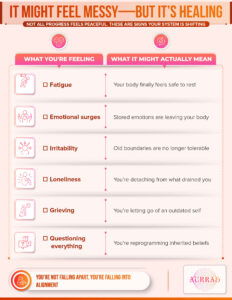
One of the most interesting things I see in sound baths and nervous system work is that people often describe emotional reconnection as transformation.
But I’m not always sure transformation is the most accurate word.
Sometimes what people are experiencing is reconnection.
They reconnect with:
- the part of themselves that once felt playful
- creative impulses that went quiet
- emotional honesty
- rest
- softness
- intuition
- desire
- grief
- joy
- stillness
And when those parts begin returning, it can feel profound because they’ve been absent for so long.
But absent is not always the same thing as gone.
The Problem with Literalism
I think one reason conversations like “there is no such thing as an inner voice” happen is because modern culture increasingly struggles with metaphorical language.
We sometimes confuse:
- “not scientifically measurable”
with - “not experientially real.”
But human experience has always relied on metaphor to communicate internal reality.
Poetry does this.
Music does this.
Therapy does this.
Spiritual traditions do this.
Even neuroscience does this at times.
We say:
- “fight or flight”
- “shutdown”
- “holding tension”
- “wired”
- “emotionally flooded”
These are interpretive frameworks designed to help us understand experiences that are difficult to fully capture with purely literal language.
And honestly, I think something important gets lost when we strip all human experience down to rigid literalism.
Because many people already struggle to understand themselves.
Over-clinicalizing every internal experience can sometimes move people further away from themselves instead of closer.
So… What Is the Inner Voice?
Maybe it isn’t one thing.
Maybe the “inner voice” is:
- nervous system information
- emotional truth
- subconscious pattern recognition
- intuition
- internal congruence
- accumulated lived experience
- personal values
- the body’s signals
- self-awareness
- desire
- discernment
Or maybe it is simply the quieter part of ourselves that becomes harder to hear when fear, noise, urgency, conditioning, and over-adaptation become too loud.
Whatever language we use, I think most people recognize the experience.
The moment something inside them hesitates.
The moment they know they are saying yes when they mean no.
The moment they realize they’ve been performing wellness instead of actually feeling well.
The moment they understand they have spent years becoming who they needed to be… while quietly losing touch with who they already were.
Maybe the goal is not to argue over whether the phrase inner voice is technically precise.
Maybe the deeper question is:
Are we listening closely enough to ourselves to recognize what our lives, bodies, emotions, and nervous systems have been trying to communicate all along?
If this resonated with you, Monday Reset was created for exactly these kinds of conversations and experiences — the places where stress, adaptation, overthinking, emotional holding, and nervous-system exhaustion slowly begin to distance us from ourselves.
Each week, we explore a different emotional or nervous-system theme through guided meditation and immersive sound designed to help you reconnect with your own internal signals again — gently, without pressure or performance.
Because sometimes the goal is not becoming someone new.
Sometimes it’s learning how to hear yourself again.
You can explore upcoming Monday Reset themes and join us here: https://aurras.com/monday-reset/