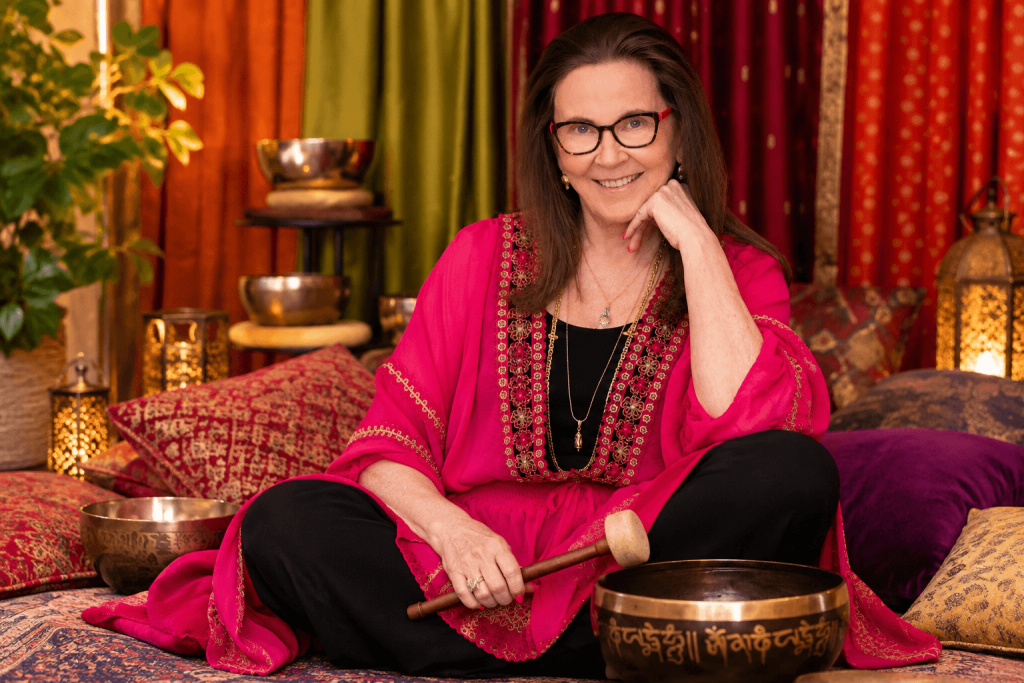
I offer live sound baths and guided meditation to help you calm an overstimulated nervous system and find real rest. This is for people living with chronic stress, people seeking nervous system regulation, and people seeking deeper rest and meaningful renewal, whether you join online from home or sit in the room with me in the Kansas City area.
How do I know if a sound bath will actually help my specific nervous system issues?
The honest answer is that you find out by trying a session and noticing how your body feels afterward, because response varies from one person to the next. Some people sink into the deepest sleep they have had in months, some feel a quiet emotional release, and a few notice very little the first time and more by the third.
Sound works on your autonomic nervous system, the part that runs fight-or-flight and freeze without asking your permission. After stress or trauma, that system can get stuck in hypervigilance or shutdown. Low tones and steady rhythm can ease an overactive stress response and help your body find a sense of safety and predictability again. Because sound reaches you beneath language, it can be a useful path when talking things through in circles has not brought relief. If you want the mechanics, I explain how your nervous system responds during a session.
Research suggests that low-frequency, steady, and rhythmic sounds may support relaxation by providing the brain with a predictable auditory pattern that encourages focused attention and meditative absorption. A 2018 EEG study found that the brain tracks rhythmic beats more strongly when presented through low-pitched sounds, while a 2025 neuroscience review identified repetitive drumming as a potential facilitator of relaxation and altered states of awareness. Additionally, a 2017 study by Goldsby and colleagues found that singing bowl meditation was associated with significant reductions in self-reported tension, anxiety, and fatigue. Although these findings are promising, research has not yet established that low frequencies themselves directly regulate the nervous system; rather, their benefits likely arise from a combination of rhythm, sustained attention, sensory immersion, and the meditative experience. (2018 EEG study; 2025 neuroscience review; Goldsby et al., 2017)
I want to be straight with you: a sound bath does not fix a nervous system issue the way a repair fixes an engine. It creates conditions where your body can settle and practice another way of being. For most people, a few repeated sessions tell you more than a single one, since a nervous system that has run hot for years usually needs more than one experience of calm to trust it.
What is the difference between a sound bath, vibroacoustic therapy, and frequency-based sound healing?
A sound bath is live acoustic sound you listen to, vibroacoustic therapy is low-frequency sound delivered into your body through equipment like a vibrating table or pad, and frequency-based sound healing usually means recorded tones or binaural beats played through headphones. They overlap in goal but differ in how the sound reaches you.
My work is live sound baths using Tibetan singing bowls and my voice, paired with guided meditation. I don’t use devises such as low-frequency, vibroacoustic tables or equipment as those devises are focused on individuals rather than groups. The Tibetan singing bowls I use are considered low to medium range frequencies.
Research on vibroacoustic stimulation indexed by the U.S. National Library of Medicine has reported measurable effects on physiological and psychological stress. The evidence for recorded binaural beats, by contrast, is more mixed according to the Association of Accredited Naturopathic Medical Colleges’ review of the science behind sound therapy. That is part of why I work with live sound in a guided, trauma-aware setting rather than a frequency track alone. If you are weighing the different approaches, my overview of vibrational sound therapy covers what each can and cannot promise.
What actually happens in a session?
Most people start with the Monday Reset, a 30-minute online live sound bath and guided meditation held every Monday at 10:00 AM Central (8:00 AM Pacific). You settle in at home, I guide a short grounding, then the bowls carry you through a period of supported listening, and I bring you gently back to ordinary awareness at the end.
The session is trauma-aware, so you stay in control the whole time. You can keep your eyes open or closed, change position, take a break, or simply notice what comes up without doing anything with it. There is nothing you have to feel and no particular outcome you have to reach. One participant messaged me that she slept nine hours after a sound bath, more than she had managed in months. Another told me that since starting the Monday Reset in March she has felt more self-aware and at peace. Your experience is your own, and I never prescribe what it should be.
I also run in-person sound baths in the Kansas City area for people who want to feel the bowls in the room with them.
What does it cost, and is it covered by insurance?
Here is what you can book and what it costs:
| What you can book | Price |
|---|---|
| Single Monday Reset session (drop-in) | $9 |
| Full month of Monday Reset access (4 weekly sessions) | $27/month |
| In-person sound bath | $35 |
These are complementary wellness sessions rather than medical treatment, so they are not billed to insurance. The Monday Reset membership runs $9 to $27 per month depending on whether you drop in or keep full monthly access, which makes it a low-cost practice you can lean on week after week.
Why work with me?
I have run Aurras™ since 2018 and hold sound therapy certifications through the Vibrational Sound Association, Heaven of Sound, and training with Dr Rainer Michalis. My approach is trauma-aware, which means I hold space for whatever surfaces without pushing you toward a reaction or a breakthrough.
I am clear about the limits too. Sound therapy is a complementary wellness practice, not a replacement for grief counseling, psychotherapy, or medical care. If you are managing a diagnosed condition, think of this as support alongside the care you already have, and keep your clinician in the loop.
Where do you offer sessions?
In-person sound baths serve Overland Park, Kansas and the Greater Kansas City metro. The Monday Reset is online and live every Monday, so you can join from anywhere, including from home across the metro or beyond it. If you are local and want the bowls in the room with you, the in-person option is the one to ask about.
How do I book?
You can book or ask a question through the contact page or call me at (503) 260-1657. I reply within 24 hours or less, so you are not left waiting to find out whether a session fits your schedule or your situation.
Frequently asked questions
What will my first sound bath feel like?
Most people feel noticeably more relaxed, and many feel sleepy or drift partway into sleep. Some experience a gentle emotional release, and some simply feel calmer and more settled. There is nothing you need to do correctly, so you can arrive exactly as you are and let the sound meet you there.
Can a sound bath replace my therapy or medical care?
No. Sound therapy is a complementary wellness practice, and it does not replace grief counseling, psychotherapy, or medical treatment. It can sit alongside that care as a place to rest and reconnect, and I encourage you to keep working with your own clinician.
How soon will you hear back after I reach out?
I respond within 24 hours or less. Message me through the contact page or call (503) 260-1657, and I will help you figure out whether the Monday Reset or an in-person sound bath is the better fit.
Do you offer sessions during the day?
Yes. The Monday Reset is held every Monday at 10:00 AM Central, which works well if evenings are hard to get away for, such as when you have young children at home. It runs 30 minutes, so it fits into a workday or a morning break for people living with chronic stress who need a reliable pause.
About the author
Dorothy Tannahill-Moran is a certified sound therapist and facilitator known for creating experiences that are both soulful and grounded.
Her work blends therapeutic sound, guided meditation, nervous system awareness, and emotional intelligence to create spaces where people can let go of what they’ve been carrying and reconnect with what matters most.
Clients often describe Dorothy’s sessions as calming, powerful, emotional, deeply restorative, and unlike anything they expected.