

For many people with ADHD, focus is not actually the problem.
The real challenge is regulation.
Some days the mind feels overstimulated and scattered.
Other days it locks intensely onto one thing while everything else disappears.
And often, the harder someone tries to force concentration, the more mentally exhausted they become.
This is one reason many people with ADHD find themselves naturally drawn to:
- repetitive music,
- rhythmic sound,
- tapping,
- movement,
- white noise,
- or sensory experiences that create structure and predictability.
The nervous system is often looking for regulation before it can access sustained focus.
And this may help explain why bilateral stimulation and repetitive sound patterns can feel so calming and organizing for some individuals with ADHD.
What Is Bilateral Stimulation?
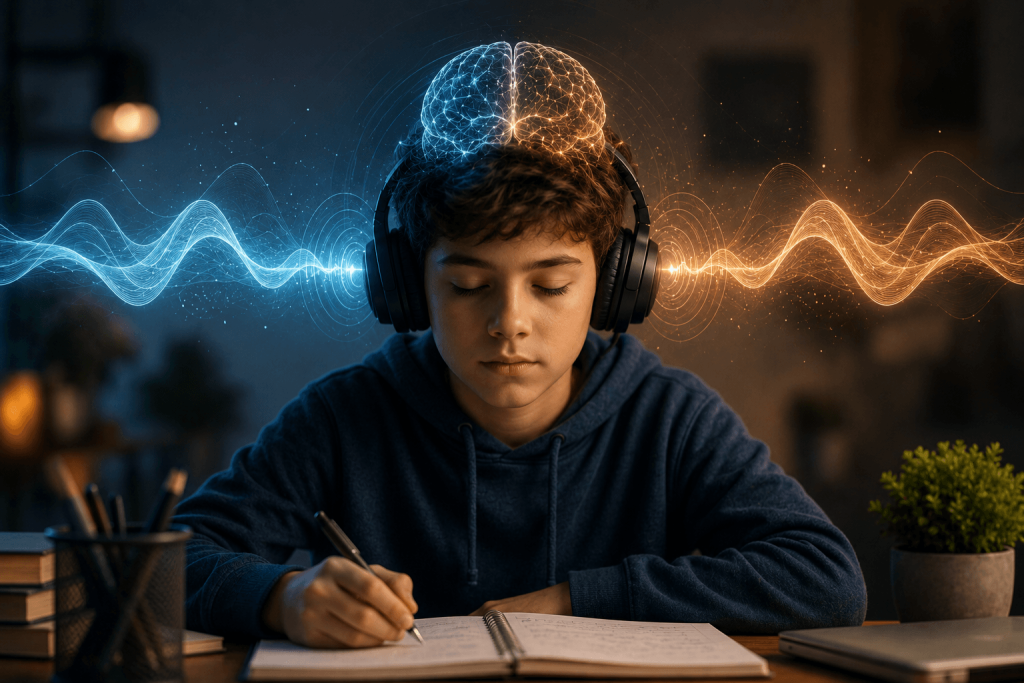
Bilateral stimulation involves rhythmic input that alternates from one side of the body or sensory field to the other.
This can happen through:
- alternating sound in headphones,
- rhythmic tapping,
- movement,
- visual tracking,
- or music that gently shifts left and right between the ears.
Bilateral stimulation is commonly associated with EMDR therapy, but many people also use bilateral sound experiences for:
- focus,
- grounding,
- stress reduction,
- meditation,
- and nervous system regulation.
The reason may be connected to how rhythm and sensory input affect attention.
Why the ADHD Brain Often Craves Stimulation
One of the biggest misconceptions about ADHD is that it is simply an inability to pay attention.
In reality, many people with ADHD experience difficulty regulating attention.
The nervous system may struggle to consistently maintain an optimal level of activation.
This can create patterns like:
- feeling mentally under-stimulated during routine tasks,
- becoming distracted while trying to focus,
- jumping rapidly between thoughts,
- seeking novelty or movement,
- or needing background stimulation to stay engaged.
This is why some people focus better:
- while listening to music,
- walking,
- doodling,
- fidgeting,
- or working in environments with controlled sensory input.
The brain is often trying to find the right balance between too little stimulation and too much.
Why Repetitive Sound Can Improve Focus
Repetitive sound creates rhythm.
And rhythm helps organize attention.
Predictable sound patterns may reduce the amount of internal “noise” competing for awareness by giving the nervous system something steady to orient toward.
For some people with ADHD, this can create a subtle anchoring effect.
Instead of attention constantly bouncing between internal thoughts and external distractions, repetitive sound offers a consistent sensory thread for the brain to follow.
This is one reason many people report improved concentration when listening to:
- bilateral stimulation music,
- rhythmic instrumental tracks,
- ambient soundscapes,
- repetitive drumming,
- or steady frequency-based audio.
The sound itself is not “forcing” focus.
Rather, it may help reduce the nervous system chaos that interferes with focus.
Why Bilateral Sound Feels Especially Grounding
Bilateral sound introduces gentle alternation between the left and right auditory field.
This shifting sensory pattern may help occupy part of the brain’s scanning and orienting system in a structured, rhythmic way.
For some individuals, this creates:
- less mental clutter,
- improved task engagement,
- easier transitions into concentration,
- and reduced feelings of overwhelm.
The effect is often subtle.
Many people describe it not as becoming intensely focused overnight…
…but as:
- feeling calmer,
- less mentally noisy,
- more settled in the body,
- or better able to stay with a task.
And that distinction matters.
Because sustainable focus often begins with nervous system regulation rather than pressure or force.
Why Overstimulation Makes Focus Harder
People often assume focus improves by trying harder.
But when the nervous system is overstimulated, attention becomes fragmented.
Stress hormones rise.
Internal vigilance increases.
The brain prioritizes scanning and reacting rather than sustained engagement.
This is why many people with ADHD experience:
- difficulty starting tasks,
- trouble staying present,
- mental fatigue,
- emotional overwhelm,
- or the strange feeling of wanting to focus while simultaneously feeling unable to settle.
Regulation becomes the missing step.
And sound can sometimes help bridge that gap by shifting the nervous system into a more organized state.
Sound Is Not a Cure — But It Can Be Supportive
It is important to say clearly that bilateral stimulation and sound therapy are not cures for ADHD.
ADHD is complex and highly individual.
But sound can become a supportive regulation tool for some people:
- alongside therapy,
- coaching,
- medication,
- mindfulness practices,
- movement,
- or nervous system support strategies.
Many people are discovering that focus does not always improve through more pressure.
Sometimes it improves through:
- rhythm,
- predictability,
- sensory grounding,
- and helping the body feel less internally chaotic.
The Nervous System Was Never Meant to Operate at Maximum Input All Day
Modern life constantly competes for attention.
Notifications.
Screens.
Noise.
Mental multitasking.
Emotional overload.
For a nervous system already struggling to regulate stimulation, this can feel exhausting.
Repetitive sound and bilateral music stimulation may help create small moments of organization inside that noise.
Not by silencing the brain…
…but by giving it a steadier rhythm to follow.
Experience the Power of Sound and Nervous System Regulation
Curious what bilateral sound stimulation actually feels like?
Try this free 4-minute audio experience designed to gently engage the nervous system through alternating sound patterns often associated with focus, calming, and emotional processing support.
Headphones recommended.